Indigenous Veterans Day

We recognize the contributions and sacrifices of Indigenous peoples in the Canadian Armed Forces. Indigenous peoples have a long history of serving in the military, continuing to do so at a higher rate than any other group in Canada.
Today serves as a reminder to acknowledge and appreciate our unique experiences and contributions, while also recognizing ongoing challenges, such as the legacy of residential schools and the fight for self-determination and sovereignty.
It is an important day to reflect on the intersectionality of Indigenous and military history in Canada and to honour Indigenous Veterans’ bravery and sacrifice.
Resources about Métis Veterans
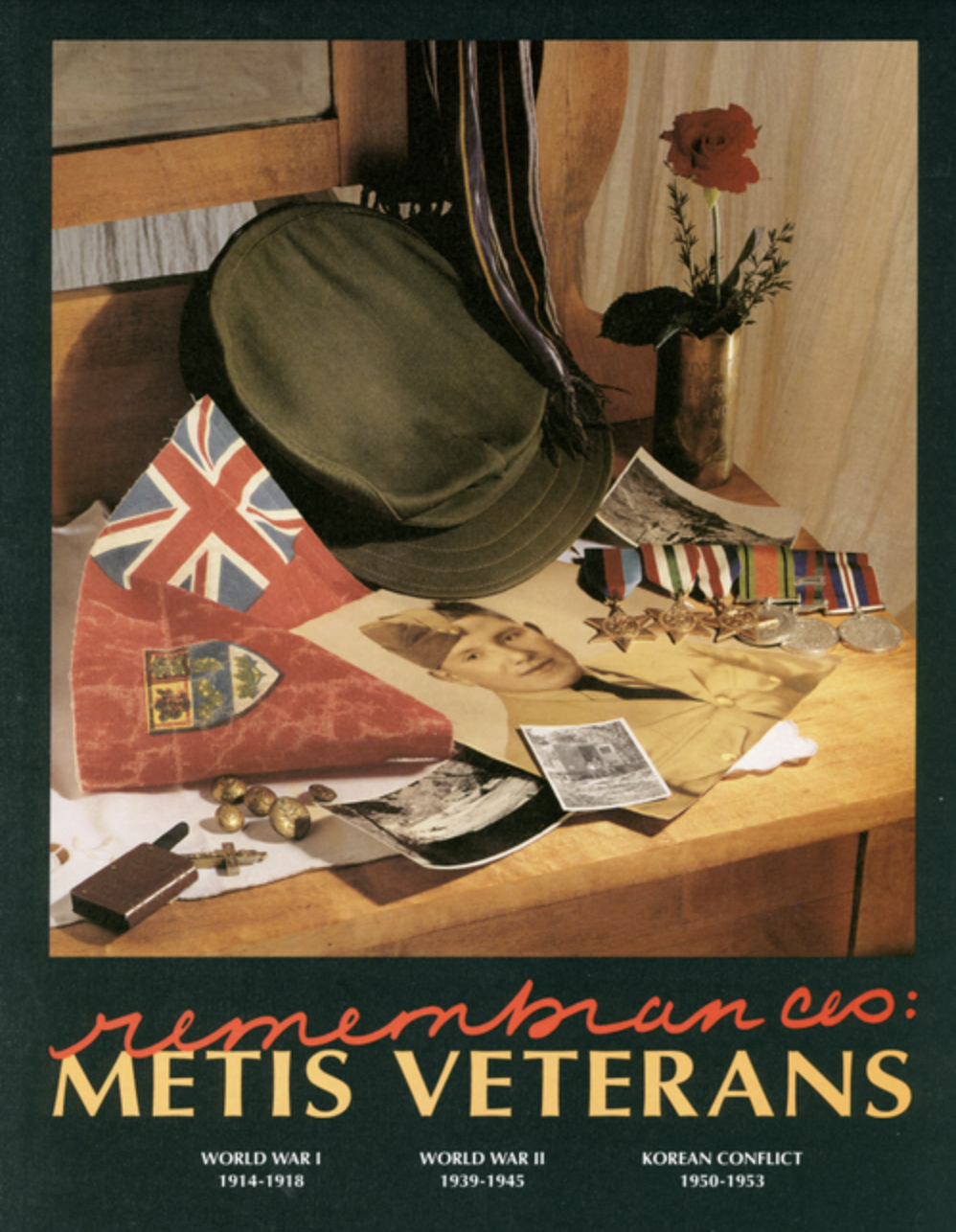
Remembrances: Metis Veterans; Interviews with Metis Veterans
by Dave Hutchinson, Anne Dorion, Rick Desjarlais
(Gabriel Dumont Institute of Metis Studies and Applied Research Inc.)
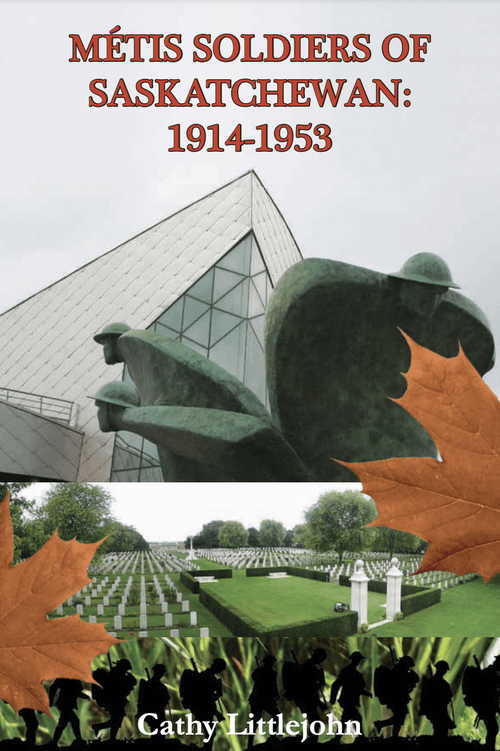
Métis Soldiers of Saskatchewan: 1914–1953 by Cathy Littlejohn
(Gabriel Dumont Institute of Metis Studies and Applied Research Inc.)
National Métis Veterans’ Memorial Monument
The National Métis Veterans' Memorial Monument was unveiled in 2014 at Batoche as a tribute to over 5,000 Métis veterans. The monument was created through years of planning, research, and fundraising efforts, and the names of veterans were collected through collaboration and submissions from friends and families. The monument serves as a place to honour the bravery and service of Métis servicemen and servicewomen, and fundraising efforts continue for future engravings and upkeep.
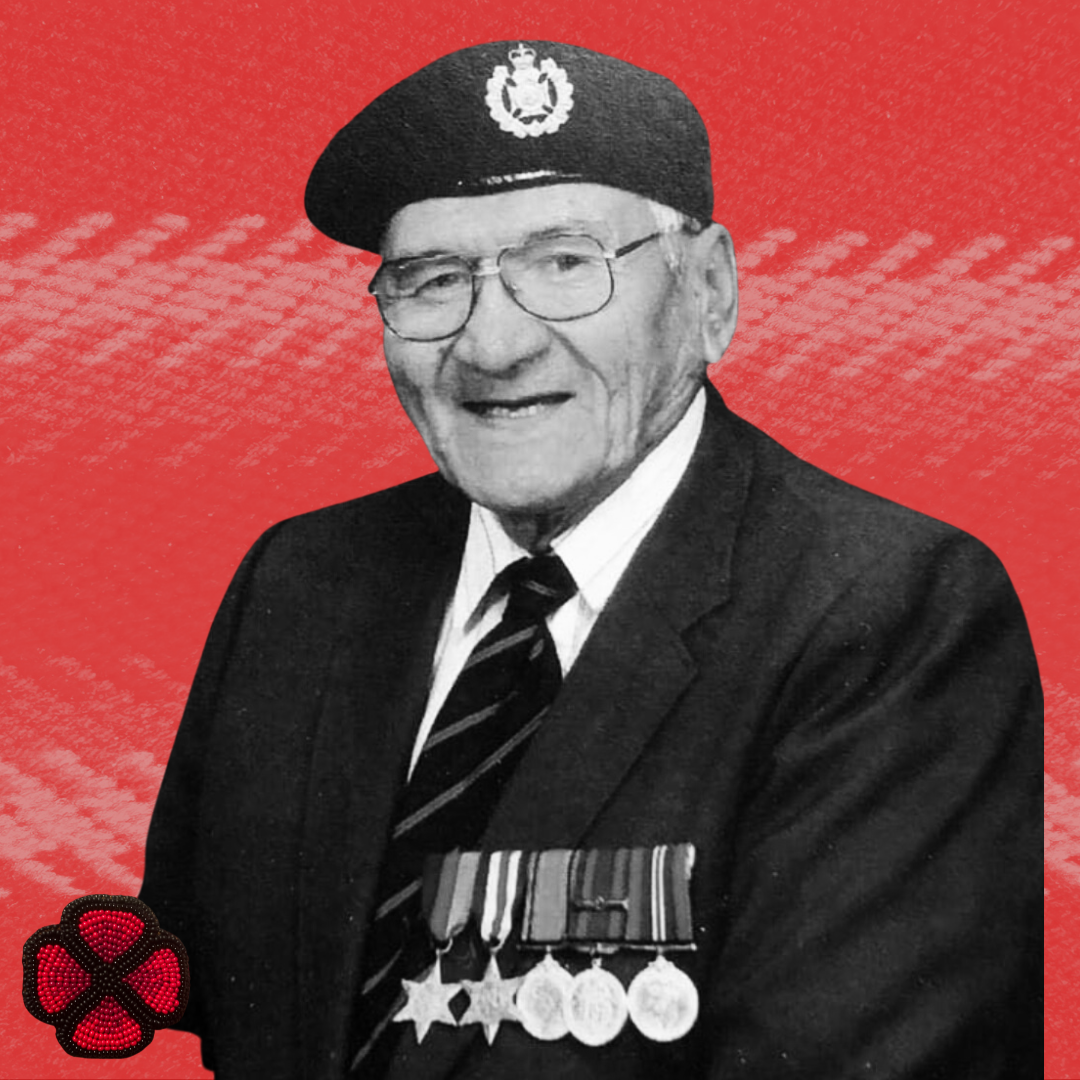
Edward King
“Edward King was born November 18, 1925 in Cochin Saskatchewan. Edward first enlisted in 1942 in Saskatoon but was rejected as he was underage. In April 1943 in North Battleford he returned to enlist and was accepted, in those days you had to be 18.5 years old Edward was 17. After enlisting he went to Regina to be sworn in, they asked him what nationality he was.
“I said Metis. He said, There is no Metis Nationality. I was Disappointed not to be recognized as a Metis.” (The Life and Times of Edward King)
March 20, 1944 Edward was called out to go on parade, on draft to Debert Army Camp in Nova Scotia. He was then sent to Halifax where he got off the train and walked right on to a ship, Edward boarded an Ile de France ship.
Their treatment overseas differed from that which they received upon returning home as the late Métis Nation of Saskatchewan Senator, Edward King, remembers: “As half-breeds, we were really respected over there. I was surprised because we could go into any place there. But back home not all of us could go into the bars”. Although the war had left Métis soldiers emotionally and psychologically affected, many brought new skills and abilities back to their communities. (Metisveterans.ca)
When the ship stopped and let its barge down Edward walked through water up to his armpits to get to shore. Edward slept with a rifle in his hand, grenades on his belt and 100 rounds of ammunition over one shoulder and across his chest. September 27, 1944, Edward was wounded on his left arm and left leg when he was ordered to help hold the line. Edward was wounded again in 1945 and spent three months recovering in hospital. After coming under German fire, he made a run for it jumped off the top step landing on both feet. He took two steps and a bullet hit his steel helmet, then a bullet hit above his knee. Edward was discharged.
Edward married Cecile Ouellette Sept 23, 1952 in Meadow Lake during a double wedding with Emile Aubichon & Lorraine Tanner. After the wedding guests went to Joe Ouellette’s house, Edward Morin grabbed the fiddle at 3pm and Frank Ouellette grabbed the guitar. The floor manager was Joe Ross & the Square Dance caller was Ernest Nault. They danced till morning and started again the next night. Edward and Cecile had 10 Children, 40 grandchildren, great grandchildren, and now great-great grandchildren.
Edward worked Tirelessly to ensure that Metis Veterans like him and his fellow comrades received recognition and compensation that was promised from the Government. Edwards service has been instrumental in receiving compensation for Metis Veterans. Edward Served 7 years as the Vice President of the Saskatchewan Metis Veterans Association from May 23, 1985 – Jan 31, 1992. He served as Treasurer in Jan 1993-1994 and again was the Vice President in January 1997.The year 2000 Edward published a book about his experiences in WWII called “The Life and Times of Edward King”. He was always ready to share his stories in hopes that it would help others, he did this in local schools in Meadow Lake, Community Events, or special meetings.
Edward passed away Jan. 2001 unfortunately he was not able to witness when Ottawa issued a multi-million-dollar apology for the lack of supports before and after the Second World War. – Sep 10, 2019. The timeline of Edwards life did not match the criteria (January 2016) put forth when our Metis Veterans finally received compensation.
Thank you, Late Edward King WWII Veteran & your family, for all the sacrifice you have endured for our Metis people.” – Gwen King
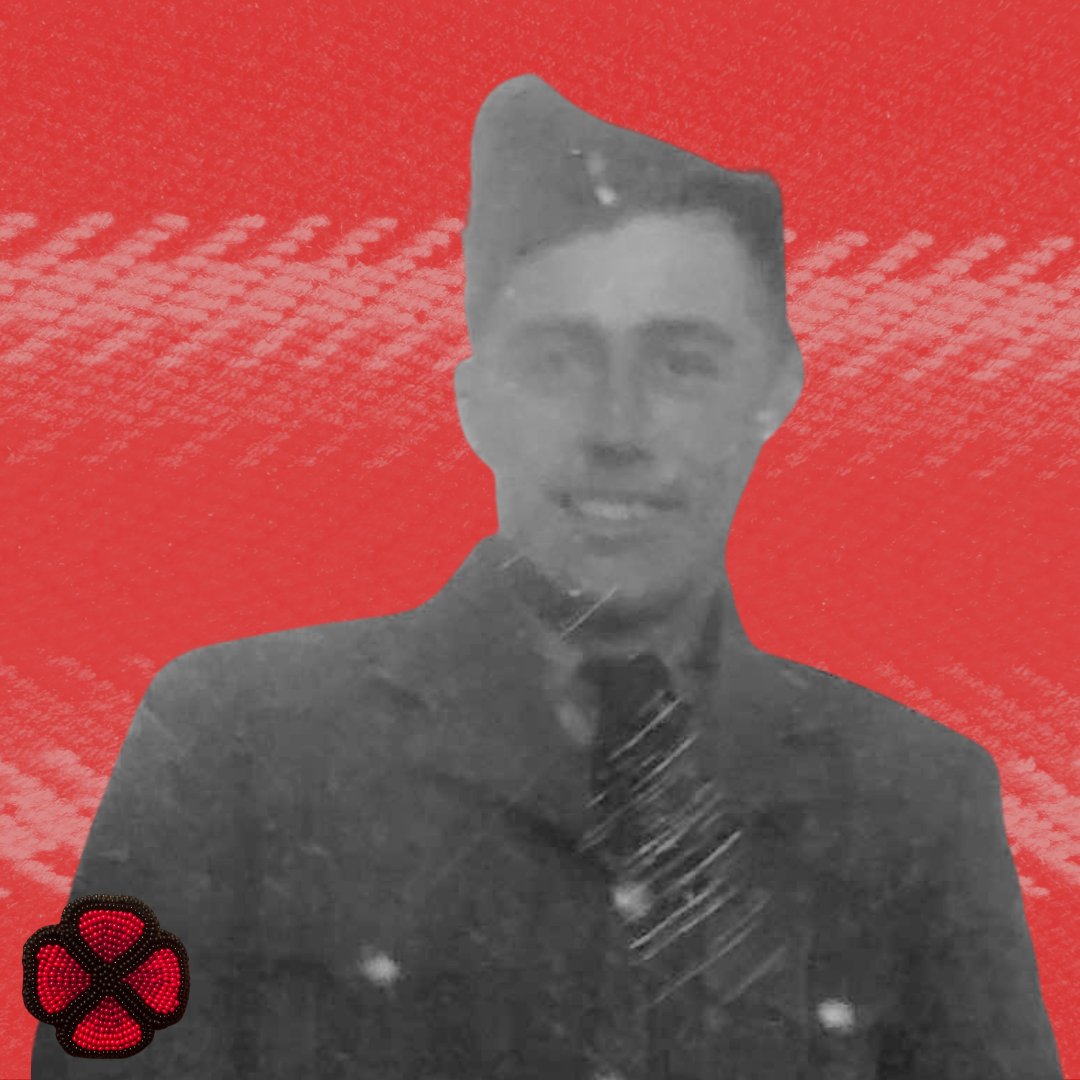
John Lavallee
“This is my uncle John Lavallee, he was wounded in World War II at the age of 19 at the front lines. He was the only survivor in his battalion. He was spotted trying to help one of his friends. Due to the shrapnel throughout his body they could not remove all of it, thus he became a paraplegic.” – Denise McKenzie
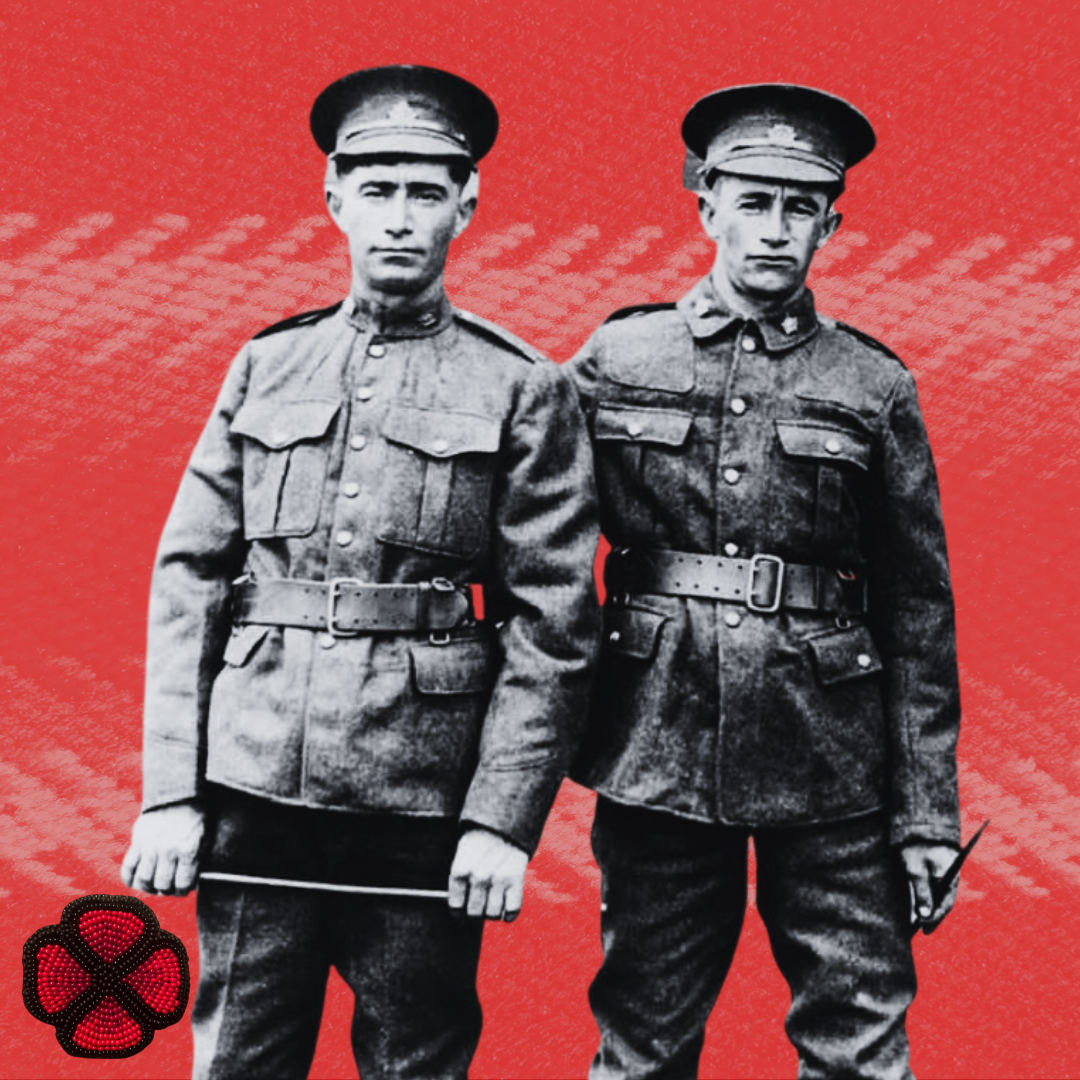
Alexandre & Arthur Lavallee
“My grandfather Alexandre Lavallee on the left with my great uncle Arthur Lavallee both served in World War I originally from St Laurent, MB served in the 52nd Regiment fighting in the front lines of France & Belgium. After the war when they returned back to their villages, they did not receive anything other than their medals, other veterans returning to their towns received new homes and farm land. The Métis were not treated equally, my dad remembers they were so poor and he remembers seeing my grandfather go out moose hunting in his army uniform and brought home a moose 3 days later.” – Denise McKenzie
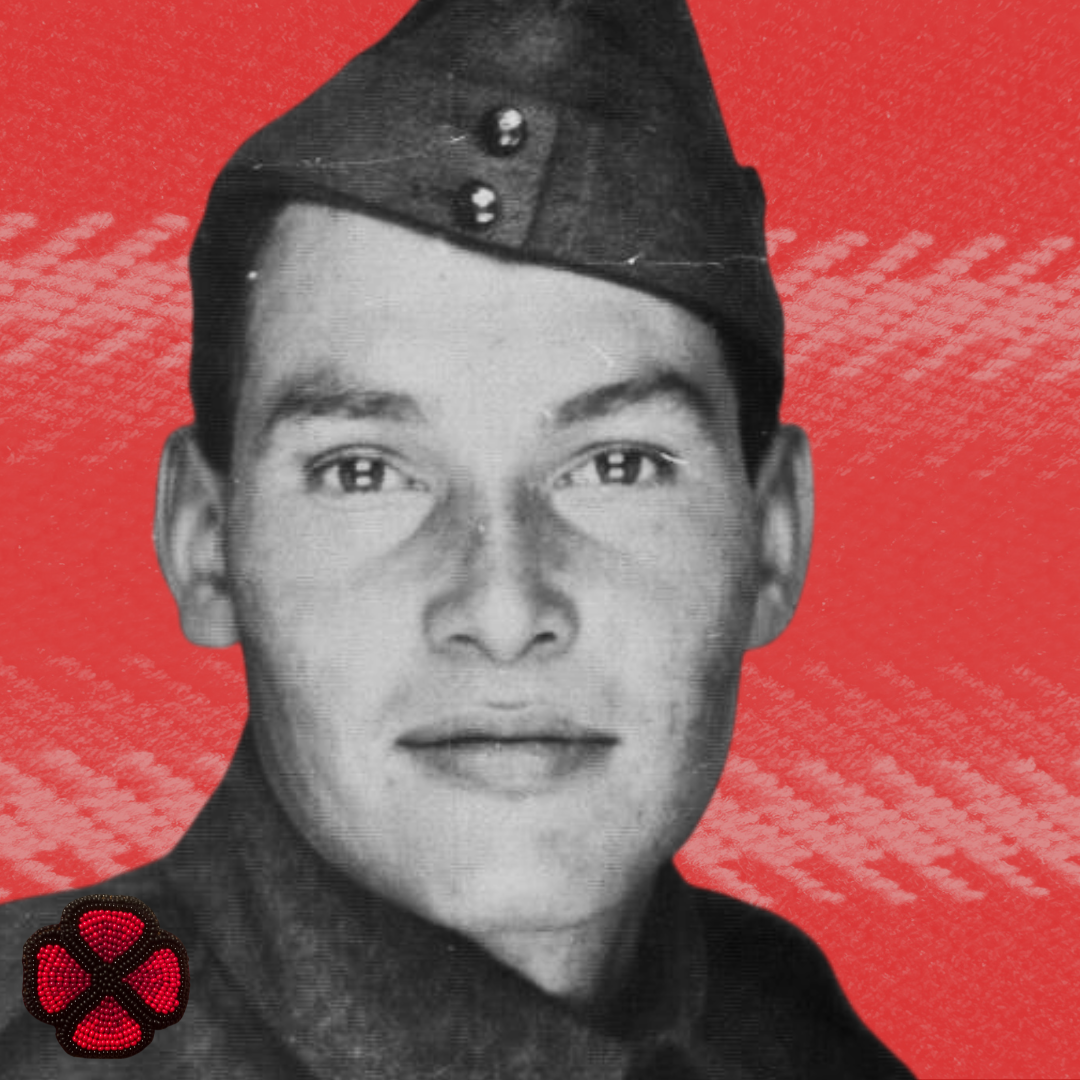
Michael Pelletier
Who is this man?
Please, tell me.
I do not know.
Confusion consumes me.
The treasured photo of my father…
–the man standing before me.
The same?
The photo and this man?
Memories faded.
Forever lost.
Years stolen,
amid the years that passed.
No recognition.
This stranger–my dad?
At the moment of my birth,
our lives forever intertwined.
Bonds–unbreakable,
solid, firm.
Severed!
Rejection, cutting deep into his soul.
Fragile heart, shattered.
As he looked into my eyes;
No existence.
Only the faded photo, a constant reminder.
Heartache, silently endured.
Clutching, clinging fingers
to the man,
Vanished. Disappeared.
War robbed, leaving only the mere shadow–
of who he was before.
Pain hidden in his eyes, of torment that’s untold.
The burden of his load.
Returning, to a beloved child
Unaccepting; absolute disowning.
Time passes.
Slivers of recognition
amid the clouds of doubt,
as denial fades away.
Beyond the scars,
the tortured body of haunted memories.
A glimpse of who he really was,
A resemblance to my dad?
Thirsting for truth.
Reality–rushes to the forefront,
Evoking, a wide array of emotions.
Like flood gates being released.
Realization.
The identity of this man,
Standing in front of me….
My Dad!
–Shawna LaRocque-Desjarlais, a poem about her Grandfather returning from the war to meet his daughter, written from the perspective of her Mother, after only having an old photo of him until he returned. Submitted by Karen LaRocque
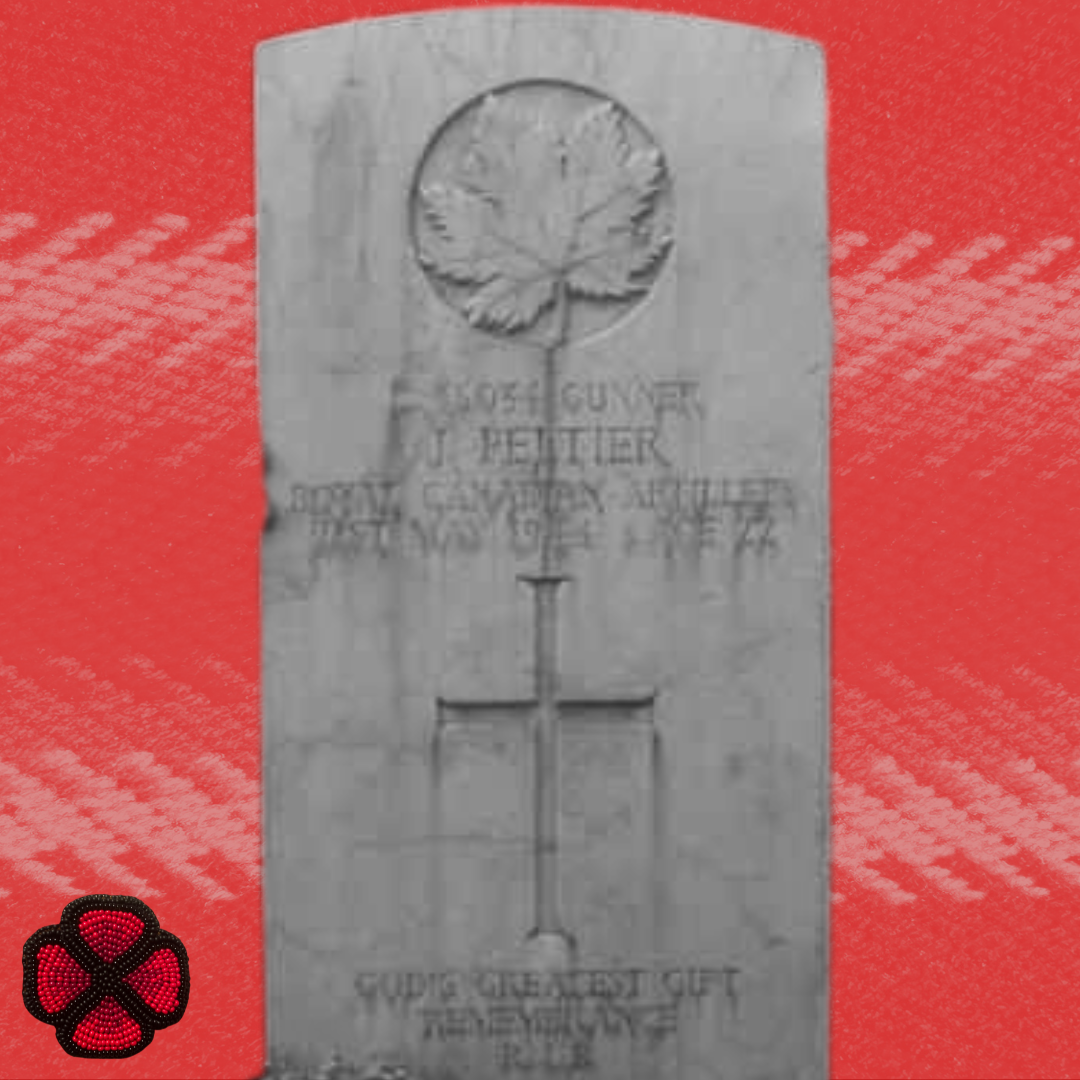
Johnny Pelletier
“That is one of my great uncles. Passed in France WWII at 16. Gravesite just found.” - Kim Blanchard
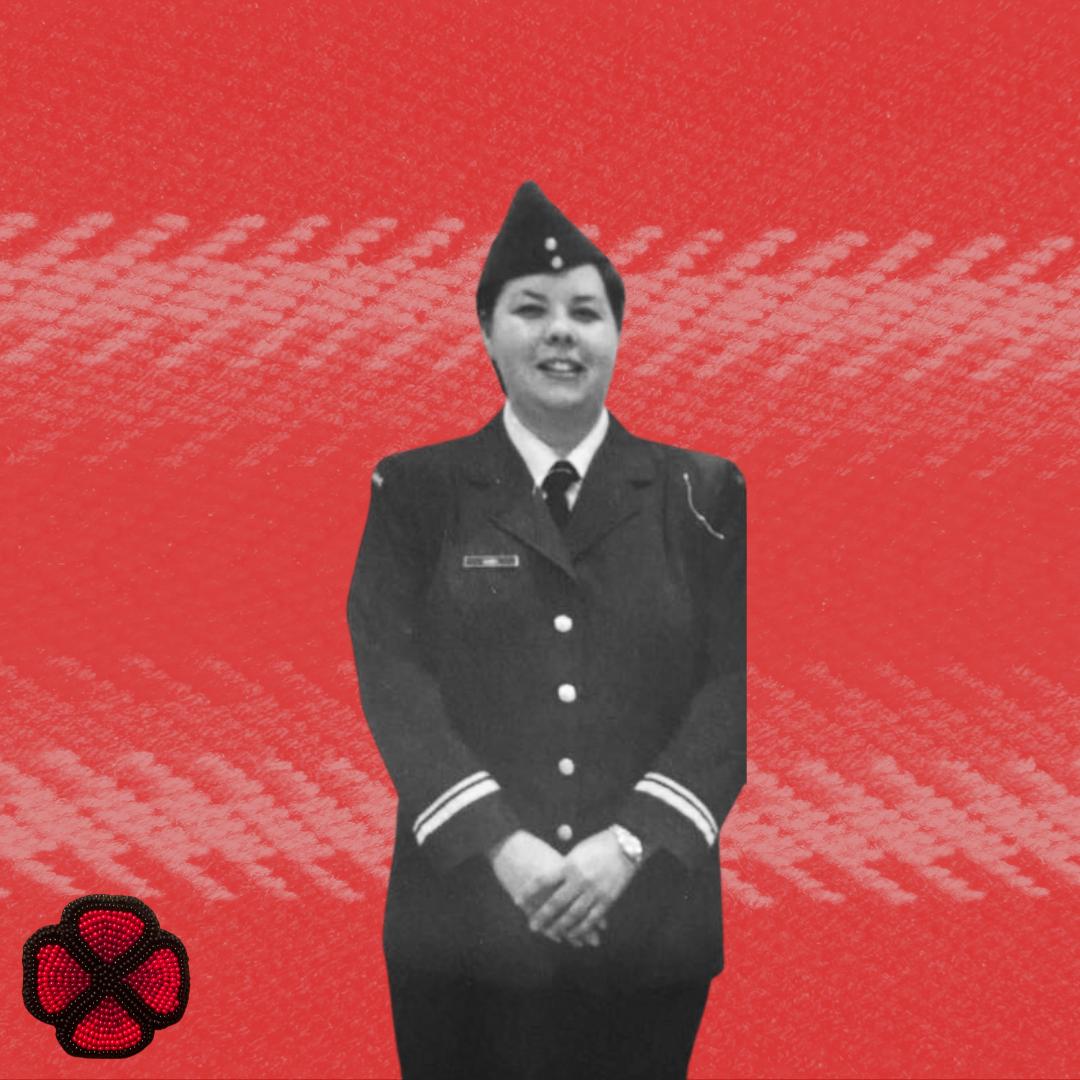
Nancy Duns
I served in the Reserves-Cadet Instructors Cadre and was Commissioned in January 1996. I achieved the rank of Captain and received my CD in 2008. My time spent as Commanding Officer and Administration Officer with various Air Cadet units is near, and dear to my heart.
Submitted by Kim Blanchard
Submitted by Beckie Belanger
Submitted by Carol Pambrun-Delorme
Submitted by Karen LaRocque